

Financial Shock: Indian Rupee Slumps to Record Low of 91.91 Against US Dollar
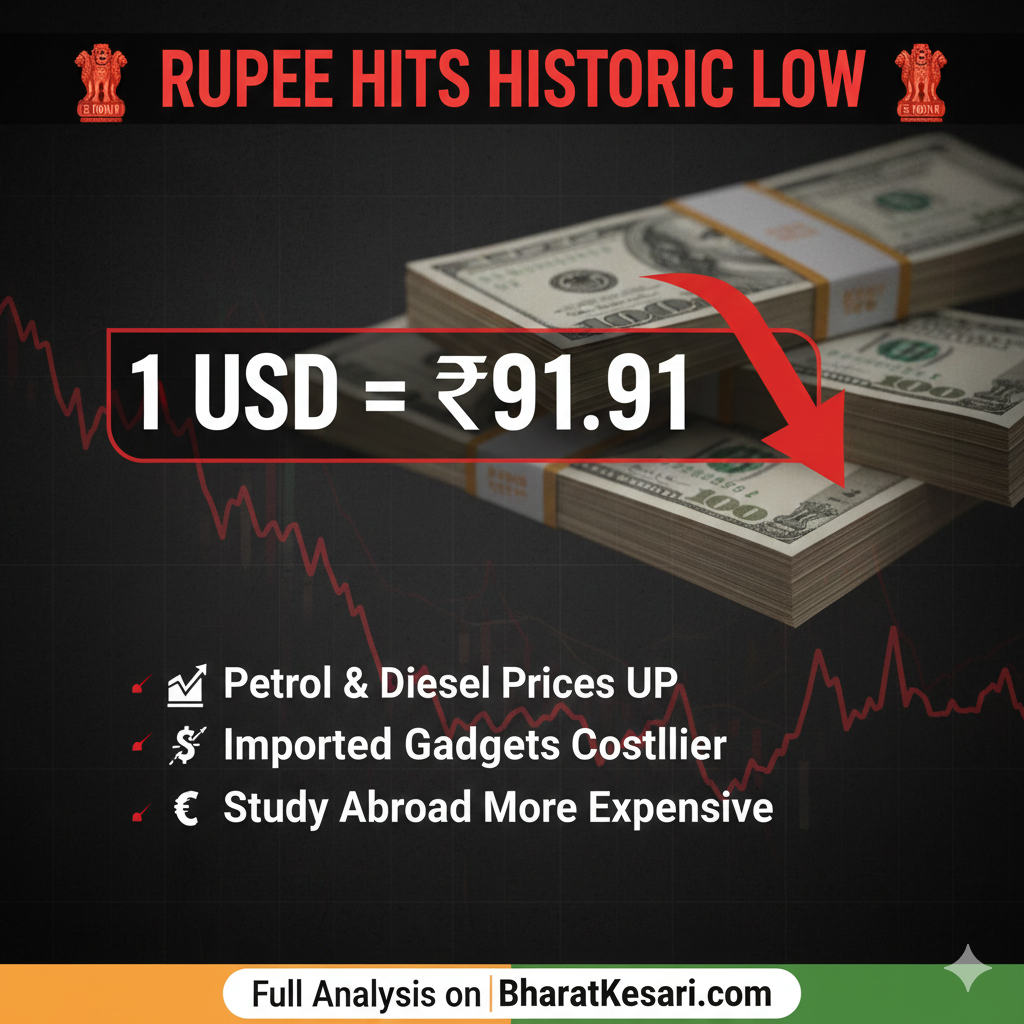
The Indian Rupee (INR) plummeted to a historic low of 91.91 against the US Dollar on Jan 23, 2026. Explore the causes, RBI's stance, and how this currency crash impacts...

Mumbai/New Delhi, January 23, 2026 — The Indian financial markets faced a turbulent session today as the Indian Rupee (INR) crashed to an unprecedented psychological low of 91.91 against the US Dollar (USD). This marks the weakest level in the history of the domestic currency, sparking concerns over imported inflation and a widening trade deficit.

Why the Rupee is Crumbling: 3 Major Factors

The sharp depreciation from the previous day’s close is attributed to a “perfect storm” of global and domestic factors:

  1. Aggressive FII Outflows: Foreign Institutional Investors (FIIs) have been on a selling spree in the Indian equity markets. In the last 24 hours alone, over ₹2,500 crore was pulled out of the Sensex and Nifty, leading to a massive shortage of Dollars in the local market.
  2. The “Davos Uncertainty”: Despite President Trump’s announcement of a “Framework Deal” for Greenland at the World Economic Forum, global investors remain hedge-wary. The lingering threat of tariffs on European allies has strengthened the Dollar Index (DXY) as a safe-haven asset.
  3. Surging Oil Prices: With international Brent crude prices hovering near the $90 mark, India’s high demand for imported oil is draining its foreign exchange reserves, further devaluing the Rupee.

Impact on Your Pocket: What Costs More?

The devaluation of the currency isn’t just a number on a screen; it has real-world consequences for the common man:

  • Fuel Prices: Since India imports the bulk of its fuel, a weaker Rupee usually translates to higher prices at the petrol pump.
  • Tech & Electronics: Expect a 5-8% hike in the prices of smartphones, laptops, and home appliances as imported components become more expensive.
  • Foreign Education: Students planning for the Fall 2026 intake in the US or UK will face significantly higher tuition costs in Rupee terms.
CategoryImpact LevelReason
Petrol/DieselHighIncreased landed cost of crude oil
SmartphonesMediumHigher cost of imported chipsets
Edible OilHighIndia is a major importer of palm/sunflower oil
GoldHighDomestic gold prices rise when the Rupee falls

The Road Ahead: Will the RBI Intervene?

Market analysts at Bharat Kesari suggest that the Reserve Bank of India (RBI) may step in to sell Dollars via state-run banks to prevent the Rupee from breaching the 92.00 mark. However, with the Union Budget 2026 just days away (February 1st), the market expects high volatility to continue.

“The 92.00 level is a critical psychological barrier. If the Rupee closes below this for three consecutive sessions, we could see a slide toward 93.50 by the end of the quarter.” — Financial Analyst, Bharat Kesari.
Farmers are the Soul of India”: Union Minister Bhagirath Chaudhary at State-Level Kisan Program
Central Minister Bhagirath Chaudhary participates in the 5th installment transfer of Rajasthan's Mukhyamantri Kisan Samman Nidhi. Learn about bull-based farming grants and new tech for farmers. Focus Keywords: Rajasthan Farmer...

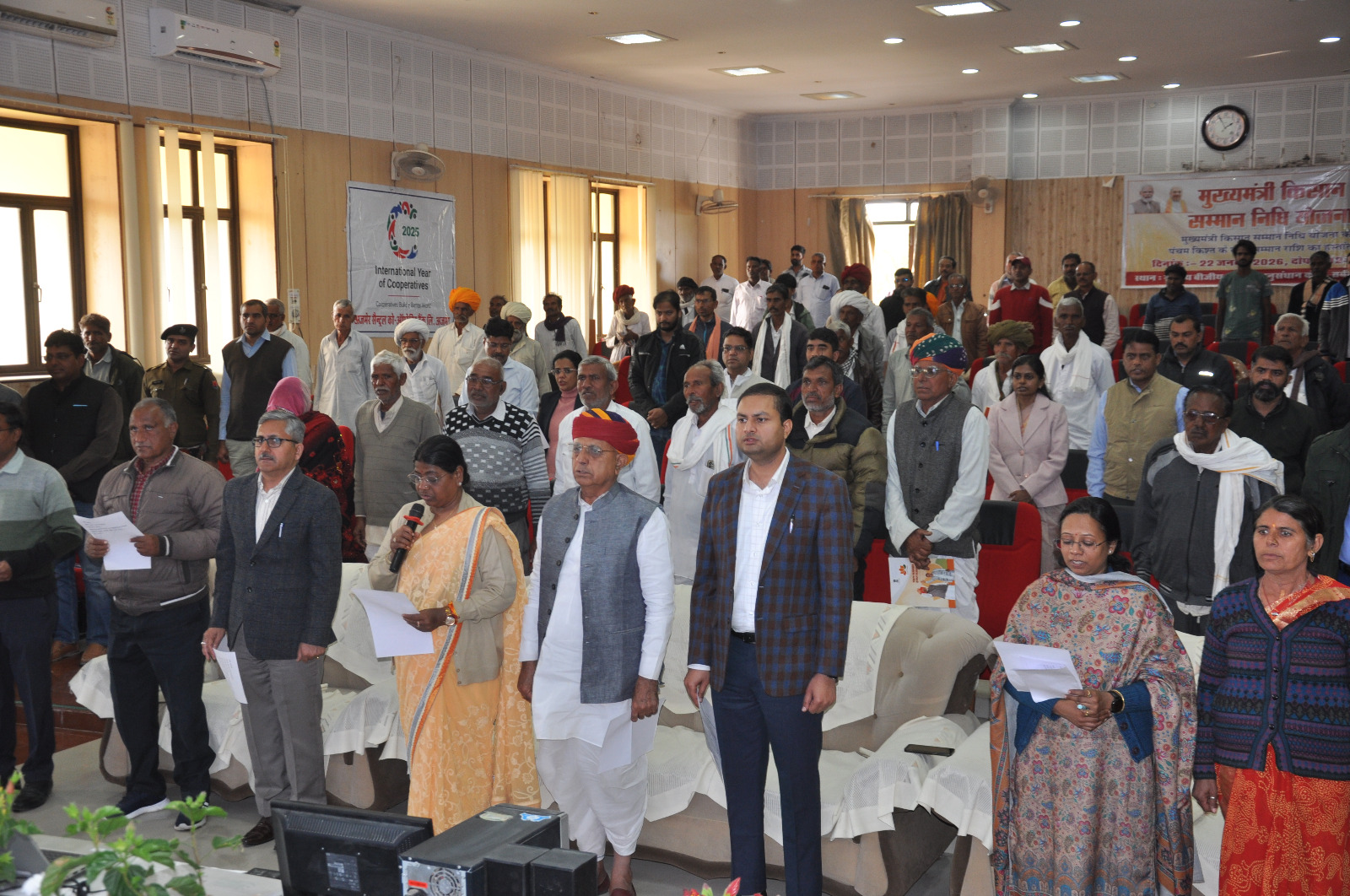
Ajmer/Jaipur, January 22, 2026 — In a major step toward rural empowerment, the Rajasthan government, under the leadership of Chief Minister Bhajan Lal Sharma, transferred the 5th installment of the Mukhyamantri Kisan Samman Nidhi (MKSN) Yojana today.

A state-level program and “Gram Utthan Shivir” were organized in Ajmer, where Union Minister of State for Agriculture and Farmers’ Welfare, Shri Bhagirath Chaudhary, and Ajmer South MLA, Smt. Anita Bhadel, highlighted the government’s commitment to the “Annadata” (farmers).

Key Highlights of the Event

1. Financial Boost for Rajasthan Farmers

Shri Bhagirath Chaudhary praised CM Bhajan Lal Sharma’s decision to increase the state’s contribution to the Kisan Samman Nidhi by ₹3,000, providing vital economic support. He noted that through the Direct Benefit Transfer (DBT) system, 100% of the funds now reach farmers’ bank accounts without any leakage or middlemen.

2. Promoting Traditional Farming: ₹30,000 Grant

In a unique move to preserve traditional agricultural practices and indigenous cattle, the state government is providing a ₹30,000 grant per farmer for bull-based farming.

  • Current Impact: Today, ₹6 crore was transferred directly to the accounts of 2,000 farmers under this scheme.
  • Goal: This initiative aims at cow conservation while promoting sustainable, low-cost traditional agriculture.

3. Modernizing the Fields

The Minister emphasized that while traditional methods are being preserved, the government is simultaneously pushing for modernization through:

  • Drone Technology for efficient spraying.
  • Nano Urea to reduce chemical dependency.
  • Soil Health Cards for scientific crop selection.
  • Increased MSP: For the first time, Minimum Support Prices are being increased before every Kharif and Rabi season.

“The farmer performs a divine task by feeding our vast population. Under PM Modi’s leadership, farmers have gained respect and economic stability, and Rajasthan is now leading the way in doubling that impact.” — Shri Bhagirath Chaudhary, Union Minister of State


Collective Patriotism: 150 Years of Vande Mataram

Marking the 150th anniversary of Vande Mataram, the event concluded with a collective singing of the national song by all attendees, including farmers, local leaders, and officials.

What this means for BharatKesari.com Readers:

The double-engine government is focusing on a “Hybrid Model” for agriculture—combining the wisdom of traditional bull-based farming with the efficiency of modern drones and DBT. If you are a farmer in Rajasthan, ensure your Jan Aadhaar and Soil Health Cards are updated to avail these benefits.

Union Home Minister Amit Shah Honors Balasaheb Thackeray on His Birth Anniversary
Union Home Minister Amit Shah pays respectful tributes to Balasaheb Thackeray on his birth anniversary, hailing him as a symbol of self-respect and national pride.

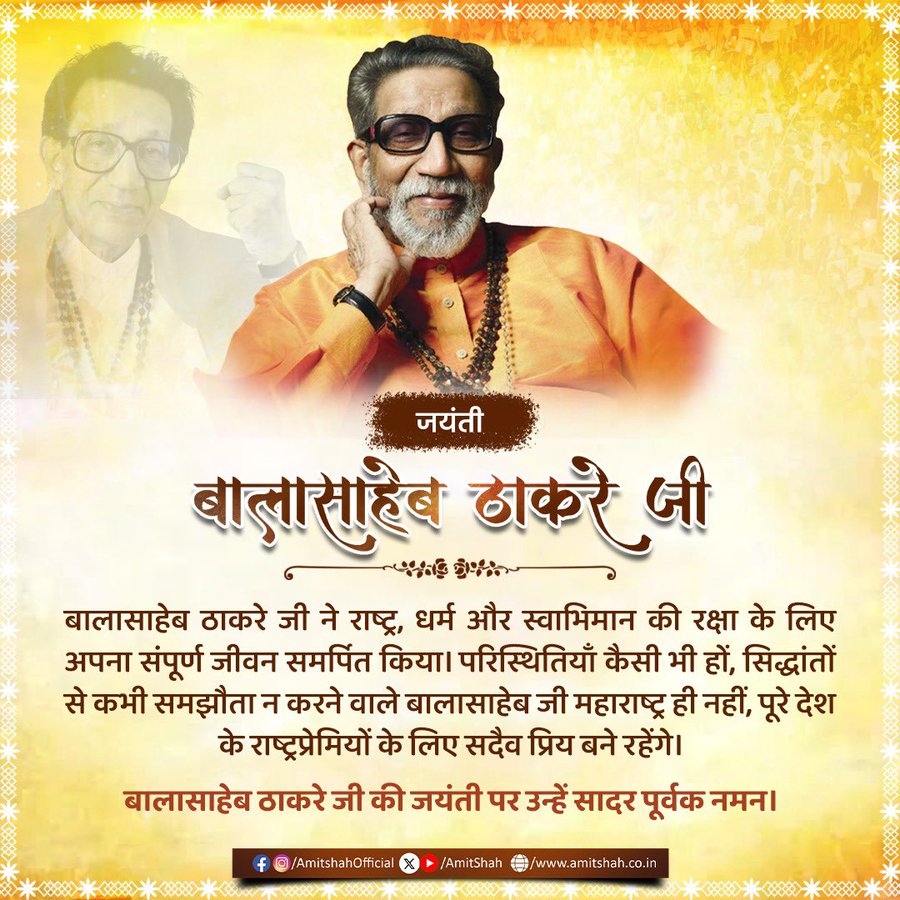
New Delhi, January 23, 2026: Union Home Minister and Minister of Cooperation, Shri Amit Shah, today paid a heartfelt tribute to the founder of the Shiv Sena, Balasaheb Thackeray, on the occasion of his birth anniversary.

In a statement shared via the X platform (formerly Twitter), Shah emphasized the late leader’s unwavering commitment to the values of nationalism and “Asmita” (self-respect).

“A Life Dedicated to Nation and Religion”

Amit Shah highlighted that Balasaheb Thackeray’s entire life was a testament to his dedication to protecting the nation, religion, and the self-respect of the common man. He noted that the “Hindu Hriday Samrat” remained a fierce protector of his ideology until his last breath.

“Balasaheb never compromised on his principles in any situation. He will always be loved by patriots not only in Maharashtra but across the entire country,” the Home Minister stated.

Legacy Beyond Maharashtra

The tribute underscores the national stature Balasaheb Thackeray achieved during his political career. While he was the quintessential voice of Maharashtra, his influence on the Hindutva discourse and national politics remains a defining chapter in Indian history.

Shah’s message resonates with millions of followers who view Thackeray as a symbol of courage and uncompromising leadership.

A Significant Day for India

January 23rd marks a double celebration for the nation. Along with the birth anniversary of Balasaheb Thackeray, the country also celebrates Parakram Diwas, the birth anniversary of Netaji Subhas Chandra Bose. The simultaneous remembrance of these two iconic figures makes the day a focal point for nationalistic pride and reflection on India’s journey toward self-reliance and identity.

Global Tensions Ease as Trump Announces “Framework Deal” for Greenland at Davos 2026
While the immediate threat of a trade war has faded, the "Greenland Question" is far from settled. With Vice President JD Vance and Secretary of State Marco Rubio leading upcoming...

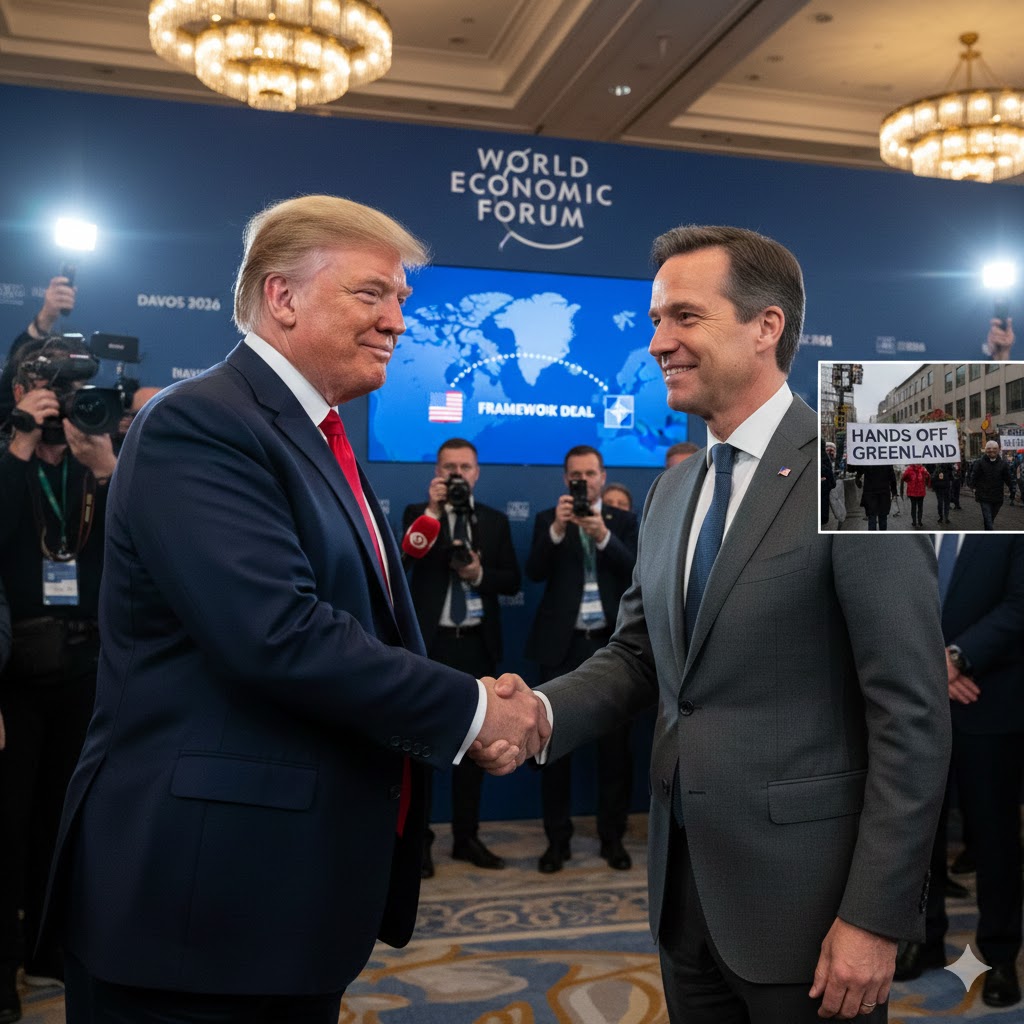
The geopolitical storm centered on the world’s largest island has taken a dramatic turn. After weeks of escalating threats and a looming trade war, U.S. President Donald Trump announced on January 22, 2026, that a “framework of a future deal” has been reached regarding Greenland and the broader Arctic region.

The announcement came following a high-stakes meeting with NATO Secretary-General Mark Rutte during the World Economic Forum (WEF) in Davos, Switzerland.

The “Greenland Crisis” of 2026: A Quick Timeline

  • January 9: President Trump states the U.S. will “do something on Greenland whether they like it or not,” suggesting a “hard way” if a deal isn’t reached.
  • January 17: The U.S. threatens a 10% tariff (rising to 25% by June) on eight European nations—including Denmark, the UK, and Germany—unless they agree to the sale of Greenland.
  • January 20: “Hands off Greenland” protests erupt in Nuuk and Copenhagen.
  • January 21-22: In Davos, Trump rules out military force and reaches a diplomatic “concept of a deal” with NATO leadership.

What is the “Framework Deal”?

While specifics remain thin, the new framework has successfully averted an immediate economic catastrophe. Key highlights include:

  • Tariff Withdrawal: Trump has suspended the proposed 10% tariffs on European allies that were set to begin on February 1.
  • Enhanced Arctic Security: NATO will reportedly ramp up its security presence in the Arctic, integrating Greenland into the “Golden Dome” missile defense shield.
  • Mineral Cooperation: The deal emphasizes joint development of Greenland’s vast rare earth mineral reserves, aimed at reducing global reliance on China.

Why Does the U.S. Want Greenland?

The interest is driven by two main factors: Security and Science. Geologically, recent studies confirm that Greenland sits firmly on the North American tectonic plate, a point Trump supporters have used to argue its “natural” belonging to the U.S.

Furthermore, as Arctic ice melts due to climate change, new shipping routes are opening, and previously inaccessible minerals—essential for electric vehicles and defense tech—are becoming reachable.

The Response from Denmark and Greenland

Despite Trump’s optimistic “concept of a deal,” Greenlandic Premier Jens-Frederik Nielsen and Danish Prime Minister Mette Frederiksen have been firm: “Greenland is not for sale.” Local leaders clarify that any “deal” refers to existing 1951 defense treaties and mineral cooperation, not a transfer of sovereignty. The residents of Nuuk remain anxious, with many viewing the U.S. pressure as a form of “modern-day colonialism.”