


Effective Communication Is the Key to Successful Implementation of Government Schemes: Raj. Chief Sec. V. Srinivas
Jaipur, January 22, 2026:
Chief Secretary of Rajasthan, Shri V. Srinivas, emphasised that systematic, timely and modern communication is the cornerstone for effective implementation and monitoring of government schemes and welfare programmes. He said that in the absence of strong communication, even well-designed policies fail to reach their intended beneficiaries.
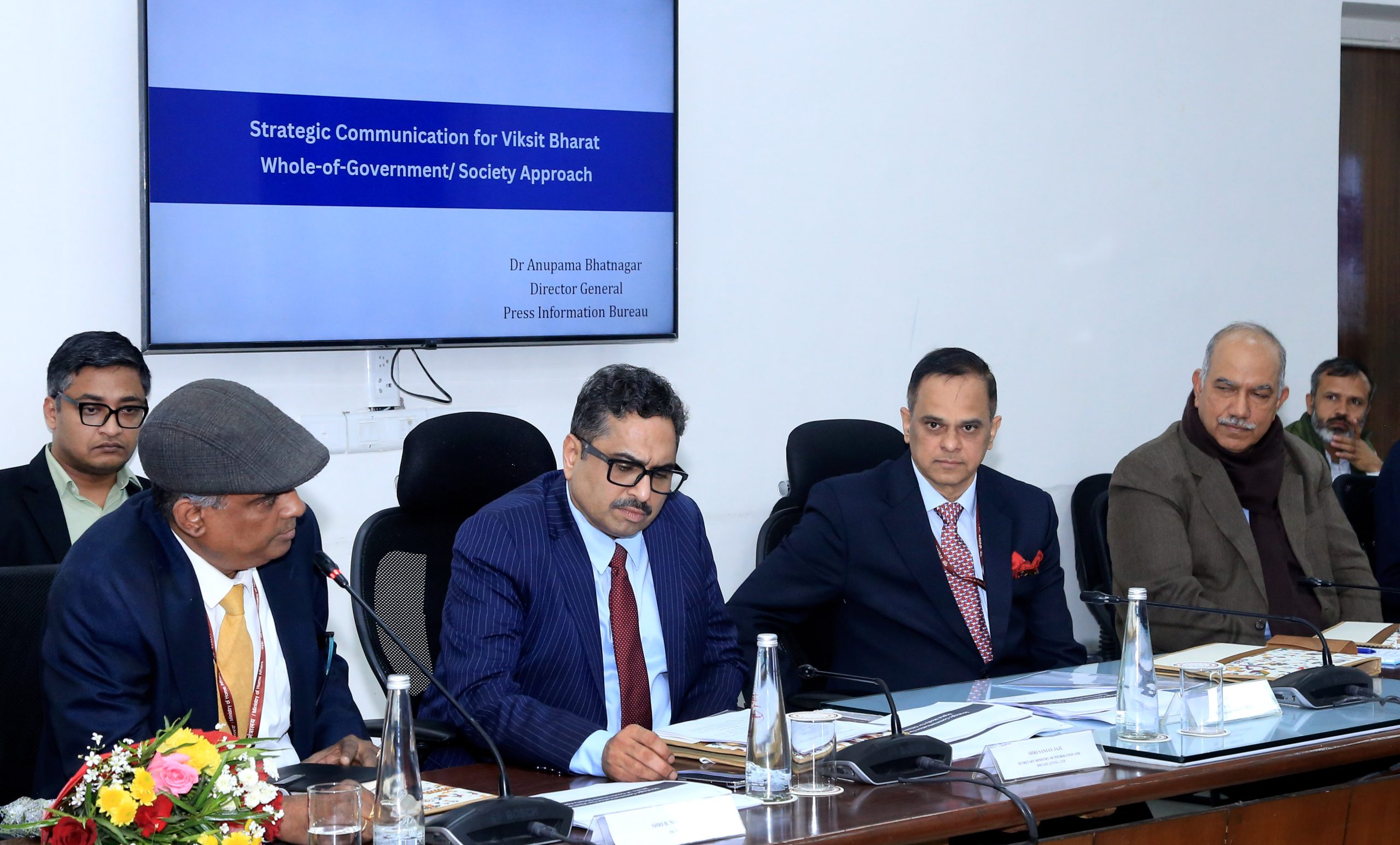
Addressing a high-level workshop titled “Reform–Perform–Transform and Inform” at the Secretariat Conference Hall on Thursday, the Chief Secretary said that all government departments must continuously upgrade their outreach strategies by adopting modern communication tools, digital platforms and social media, in addition to traditional modes of publicity.
He stated that the present era demands people-centric governance, where information must be accessible, understandable and relatable to the common citizen.
Need for Modern and Adaptive Communication
Shri Srinivas said that governance in the 21st century is no longer limited to policymaking alone; it also involves ensuring that accurate information reaches citizens in real time. With rapid technological changes and increasing digital penetration, government communication must evolve accordingly.
He highlighted that digital platforms, short videos, infographics and social media engagement have become essential tools to connect with citizens, especially youth and rural populations.
DIPR’s Innovations Enhancing Public Outreach
The Chief Secretary lauded the Department of Information and Public Relations (DIPR) for its continuous innovation in government communication. He cited recent DIPR initiatives such as:
- Army Day Parade coverage
- Employment Calendar awareness campaign
- Road Safety awareness videos
These initiatives, he said, garnered lakhs of views and widespread public engagement, proving that well-curated and relevant content can significantly amplify the government’s message.
Joint Initiative of State and Central Government
The workshop was organised jointly by the Ministry of Information & Broadcasting (Government of India) and the Department of Information and Public Relations, Rajasthan, under the guidance of the State Government.
The event witnessed participation from senior bureaucrats, communication experts and policymakers, underlining the growing importance of strategic government communication at both state and national levels.
Simple Language and Emotional Appeal Are Most Effective: Sanjay Jaju
Addressing the workshop, Secretary, Ministry of Information & Broadcasting, Government of India, Shri Sanjay Jaju, shared insights from the Central Government’s communication initiatives.
He stressed that government information should be communicated in simple, clear and credible language, supported by an emotional appeal that resonates with the public.
“When communication is simple and emotionally engaging, people not only understand government initiatives better but also feel connected to them,” he said.
Successful National Campaigns as Examples
Shri Jaju cited several national-level campaigns that effectively connected with citizens, including:
- GST Bachat Utsav
- Har Ghar Tiranga
- Swachh Bharat Abhiyan
- Ek Ped Maa Ke Naam
He said these campaigns demonstrated that clarity of message and simplicity of language are crucial for mass participation and public ownership of government initiatives.
Power of Positive News and Infographics
The Secretary noted that positive stories, success narratives and government achievements, when presented concisely through infographics and short videos, perform exceptionally well on social media platforms.
Such formats, he said, help build trust in governance and counter negativity in the digital space.
Using AI to Counter Fake and Misleading News
Highlighting a major challenge of the digital age, Shri Jaju said that governments must proactively use Artificial Intelligence (AI) to detect, analyse and curb the spread of fake and misleading news on social media.
He emphasised that timely dissemination of authentic information is the strongest antidote to misinformation.
Presentations by PIB and MMW & EMMC
On the occasion:
- Director General, PIB, Smt. Anupama Bhatnagar, delivered a presentation on innovative communication practices adopted by the Central Government.
- Principal Director General, MMW & EMMC, Shri B. Narayanan, spoke on “Platform-Specific Communication”, highlighting the importance of tailoring content according to different digital platforms.
Interactive Session with Senior Officers
During the interactive session, Additional Chief Secretaries, Principal Secretaries, Joint Secretaries and other senior officers shared their experiences, challenges and suggestions for strengthening government communication.
There was a consensus that public understanding and participation are critical to the success of governance reforms.
DIPR to Adopt a Strengthened Communication Strategy
Secretary, DIPR, Shri Sandesh Nayak, assured that the department would adopt the valuable inputs received during the workshop and work with a robust, modern and citizen-focused communication strategy.
Commissioner, DIPR, Shri Rakesh Sharma, provided an overview of the department’s digital initiatives and ongoing experiments in social media outreach.
Conclusion
The workshop reinforced the idea that Reform, Perform and Transform are incomplete without Inform.
Government schemes and policies achieve real success only when they are communicated clearly, credibly and compassionately to the people they are meant to serve.