


India Celebrates Harvest 2026: Makar Sankranti, Pongal, and Magh Bihu Traditions Revealed
January 14, 2026, India is draped in vibrant colors and festive spirit as millions celebrate Makar Sankranti, Pongal, and Magh Bihu.1 These festivals mark the Sun’s transition into the zodiac sign of Capricorn (Makara) and the start of Uttarayana, the auspicious six-month northward journey of the Sun.2+1
While the core essence of gratitude to nature and the Sun God remains the same, each region brings its own unique flavor to the celebrations.3
1. Makar Sankranti: The Festival of Kites and Holy Dips4
Celebrated primarily in North and West India, Makar Sankranti is a day of spiritual purification and sky-high joy.
- The Ritual of Snan: Thousands of devotees gathered at the Gangasagar Mela in West Bengal and various ghats of the Ganga in Varanasi and Haridwar for a holy dip, believed to wash away sins.5
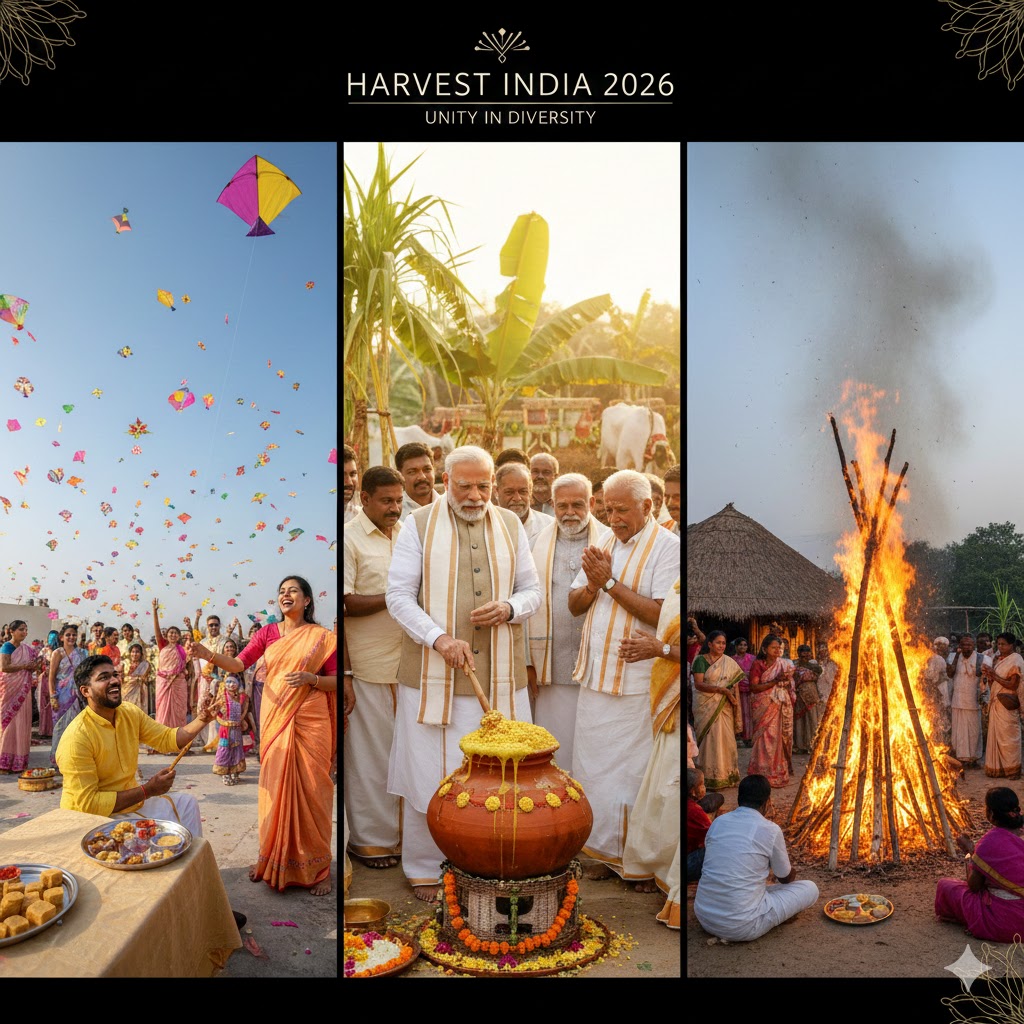
- Kite Flying: In Gujarat and Rajasthan, the skyline is a mosaic of kites.6 The International Kite Festival reached its peak today as families gathered on rooftops to participate in friendly “kite battles.”7+1
- Auspicious Muhurat: For 2026, the Punya Kala (auspicious window) is observed today from 03:13 PM to 05:45 PM, with the specific Sankranti Moment occurring at 03:13 PM.8
2. Pongal: Tamil Nadu’s Four-Day Harvest Gala9
In South India, particularly Tamil Nadu, the harvest festival is known as Thai Pongal.10
- “Pongalo Pongal!”: The main ritual involves boiling fresh rice with milk and jaggery in new clay pots.11 As the mixture overflows, people shout “Pongalo Pongal!” to symbolize overflowing prosperity.
- PM Modi’s Participation: Prime Minister Narendra Modi joined the festivities today at the residence of Union Minister L.12 Murugan in Delhi, highlighting the “Namma Ooru Modi Pongal” initiative which bridges Tamil culture with national unity.13+1
- Mattu Pongal: Tomorrow (Jan 15), the focus will shift to Mattu Pongal, where cattle are decorated and worshipped for their vital role in farming.14
3. Magh Bihu: Assam’s Feast of Fire and Food15
In the Northeast, Assam is celebrating Magh Bihu (also called Bhogali Bihu), which is centered around community bonding and feasting.16
- Uruka Night: Last night, communities gathered for Uruka, a grand feast held inside temporary thatched huts called Bhelaghars.17
- Burning the Meji: This morning, the Meji (tall structures made of bamboo and straw) were set ablaze as an offering to Agni Dev, the God of Fire.18 People prayed for a bountiful year ahead while sharing traditional snacks like pitha (rice cakes) and laru (sweet balls).19+1
Quick Comparison: The Harvest Season at a Glance
| Feature | Makar Sankranti | Thai Pongal | Magh Bihu |
| Primary Region | North & West India | Tamil Nadu | Assam |
| Key Offering | Til-Gul (Sesame & Jaggery) | Sweet Pongal (Rice/Milk) | Pitha (Rice Cakes) |
| Major Symbol | Kites & Holy Dips | Overflowing Pot | Meji (Bonfire) |
| Deity Worshipped | Surya (Sun God) | Surya & Cattle | Agni (Fire God) |
Cultural Unity in Diversity
President Droupadi Murmu and PM Modi both highlighted that these festivals are a testament to India’s “Ek Bharat Shreshtha Bharat” spirit.20 Whether it is through the exchange of Til-Gul in Maharashtra or the sharing of Jolpan in Assam, the underlying message remains: a deep respect for the Earth, the farmers, and the celestial cycles that sustain life.21+1
Would you like me to find the best traditional recipes for Pongal or the specific bank holiday list for your city tomorrow?